
Close
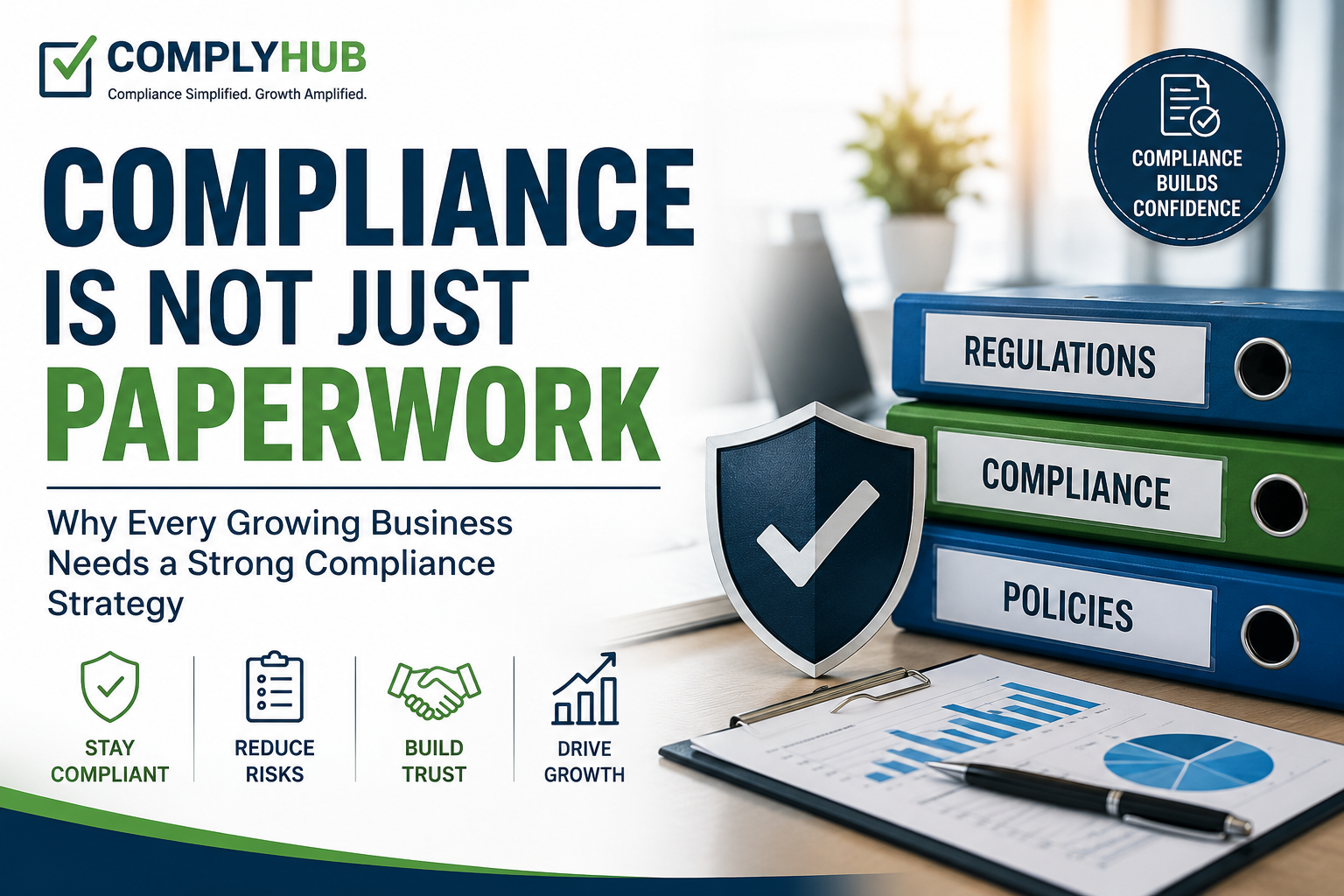
When people think about running a business, they often imagine product development, sales targets, marketing campaigns, customer acquisition, and expansion plans. Rarely does compliance make it to the top of the priority list. For many entrepreneurs, compliance is seen as a routine administrative task—something that needs to be completed only because regulations demand it.
However, the reality is very different.
In today’s business environment, compliance is no longer just about filing forms or meeting statutory deadlines. It has become an essential part of building a trustworthy, sustainable, and growth-oriented organization. Businesses that treat compliance as a strategic function often find themselves better positioned to attract investors, win customer trust, avoid legal complications, and scale operations smoothly.
As regulations continue to evolve across industries, staying compliant has become both more important and more challenging. This is where businesses need reliable compliance management systems and expert support to ensure that they remain focused on growth without being distracted by regulatory risks.
Business compliance refers to the process of ensuring that a company adheres to all applicable laws, regulations, standards, and internal policies relevant to its operations.
Depending on the type and size of the business, compliance requirements may include:
Compliance requirements can vary significantly based on industry, location, business structure, and operational scale. What remains constant, however, is the need to manage these obligations accurately and consistently.
Most business owners do not intentionally ignore compliance. In many cases, they simply underestimate its complexity.
Startups and small businesses often operate with limited resources. Their attention is naturally directed toward revenue generation, customer retention, and operational challenges. Compliance activities may seem less urgent when compared to immediate business priorities.
As a result, businesses commonly face challenges such as:
These challenges can gradually create risks that impact both daily operations and long-term business objectives.
Many organizations only recognize the importance of compliance after facing penalties or legal complications.
The consequences of non-compliance often extend far beyond financial fines.
Late filings, incorrect reporting, and missed statutory obligations can result in substantial penalties. Over time, these costs can accumulate and place unnecessary pressure on business finances.
Failure to comply with regulatory requirements can lead to legal notices, investigations, or disputes with government authorities. Such situations consume valuable time and resources that could otherwise be invested in growth initiatives.
Customers, investors, and business partners increasingly evaluate organizations based on governance and transparency. Compliance failures can damage a company’s reputation and reduce stakeholder confidence.
Certain compliance violations may result in restrictions, suspended licenses, or delays in approvals, directly affecting business operations.
Investors conduct extensive due diligence before making investment decisions. Businesses with compliance gaps often face difficulties securing funding because unresolved regulatory issues indicate potential future risks.
While compliance is often viewed as a mandatory obligation, forward-thinking organizations see it as a competitive advantage.
A strong compliance framework creates a foundation for sustainable growth.
Businesses that consistently meet regulatory requirements demonstrate professionalism and accountability. This enhances trust among customers, investors, suppliers, and regulatory authorities.
Accurate documentation and reporting provide management with reliable information for strategic planning and decision-making.
Proactive compliance management helps identify potential issues before they become significant problems.
Well-structured compliance processes reduce duplication of effort, improve record management, and streamline workflows across departments.
Investors prefer businesses that maintain strong governance practices. Demonstrating compliance readiness can significantly improve funding opportunities.
As regulations become more complex, manual compliance management is becoming increasingly difficult.
Businesses are now adopting technology-driven compliance solutions to improve visibility, accuracy, and efficiency.
Modern compliance platforms help organizations:
Technology not only simplifies compliance management but also provides businesses with greater confidence in their regulatory preparedness.
Regulations rarely remain static. Governments and regulatory authorities continuously update policies to address changing economic, technological, and social conditions.
Businesses must therefore remain vigilant and adaptable.
Some emerging compliance challenges include:
As businesses move operations online, they face new requirements related to cybersecurity, data privacy, and digital governance.
Regulators are increasingly focused on transparency, financial accountability, and risk management practices.
Companies operating across multiple jurisdictions must navigate different regulatory frameworks and reporting standards.
Organizations are increasingly expected to comply with sustainability and environmental regulations that impact operational practices.
Managing these evolving requirements requires expertise, planning, and continuous monitoring.
Compliance should not be treated as an isolated activity performed only during filing seasons. Instead, it should be integrated into the organization’s overall business strategy.
An effective compliance strategy typically includes:
Businesses must first understand which laws and regulations apply to their operations.
Clear ownership helps ensure accountability for compliance-related activities.
Accurate records form the foundation of successful compliance management.
Regular monitoring helps businesses stay informed about new requirements and updates.
Internal audits and compliance reviews help identify gaps before they become significant issues.
Professional support can simplify complex compliance requirements and reduce the likelihood of costly mistakes.
Managing compliance internally can become overwhelming, especially as a business grows.
A trusted compliance partner provides:
Rather than spending valuable time navigating regulatory complexities, businesses can focus on innovation, customer satisfaction, and growth.
At ComplyHub, we understand that compliance is more than a checklist of regulatory tasks. It is a critical component of business success.
Our approach focuses on helping businesses simplify compliance management through expert support, structured processes, and proactive monitoring.
Whether you are a startup establishing your regulatory foundation or an established enterprise managing multiple compliance obligations, ComplyHub provides solutions designed to meet your unique requirements.
By helping businesses stay organized, informed, and compliant, we enable leaders to focus on strategic priorities with greater confidence.
The business landscape will continue to evolve, and compliance requirements will become increasingly sophisticated. Organizations that invest in strong compliance practices today will be better prepared to navigate future challenges and opportunities.
Compliance should not be viewed as a burden or a box-ticking exercise. It is an investment in business stability, credibility, and long-term growth.
Companies that prioritize compliance are not simply avoiding penalties—they are building stronger foundations, earning greater trust, and positioning themselves for sustainable success.
In a world where regulations, stakeholder expectations, and business risks continue to grow, effective compliance management is no longer optional. It is a business necessity.
And with the right partner by your side, staying compliant can be simpler, smarter, and far more valuable than many organizations realize. ComplyHub is committed to making that journey easier, helping businesses transform compliance from a challenge into a strategic advantage